Thriving on ODSP (Is It Even Possible?)

ODSP Survival to Thriving: Real Talk + Real Tips

Let’s just say it out loud:

ODSP wasn’t exactly designed with the word “thriving” in mind.

It’s more like… “getting by with careful math and a bit of creativity.”

But here’s the part that doesn’t get talked about enough: yes, it is actually possible to build a version of life that feels stable, even good, on ODSP.

Not perfect. Not flashy. But solid, intentional, and sometimes even… kind of impressive.

First: Redefine What “Thriving” Means

Thriving on ODSP doesn’t look like luxury condos and spontaneous trips to Italy.

It looks more like:

  • Knowing your numbers
  • Keeping your expenses low
  • Finding ways to bring in ODSP extra money
  • Getting creative instead of overwhelmed

It also means accepting that sometimes life gets weird.

Like:

  • Washing dishes with shampoo because you ran out of dish soap
  • Living off beef jerky bought with a gas card your parents gave you for Christmas
  • Turning leftovers into “meal prep” whether you meant to or not

It’s not glamorous. But it’s real. And it works.

The Truth About Money on ODSP

The system has limits. You already know that.

But there is some flexibility, especially when it comes to earning ODSP extra money.

You can:

  • Work part-time
  • Run a small side hustle
  • Start something small from home

And yes, it’s worth understanding how that income affects your benefits.

That’s exactly why the ODSP calculators exist. They help you estimate what happens when you earn more, save more, or change your situation, before you make a move.

Small Ideas Can Lead to Big Shifts

Not everyone on ODSP is going to launch a full business.

But a surprising number of people are quietly experimenting with:

  • Selling things online
  • Offering small local services
  • Creating digital products
  • Testing out an ODSP business startup idea

And here’s the part people miss:
There are also programs and supports out there including ODSP grants for small businesses to hire ODSP recipients and other community funding options that can help you get started earning.

You don’t need a full business plan on day one. You just need something small that works.

If you’re stuck on where to begin, check out the 100 side hustles list. It’s full of realistic, low-pressure ways to bring in extra income without burning yourself out.

You Can Still Live Well (Yes, Really)

This might be controversial, but it’s true:

You can still live in style anywhere in Ontario when your expenses are minimal.

Style doesn’t mean expensive.
It means intentional.

  • A clean, simple space
  • A few things you actually love
  • A routine that works for you

When you cut unnecessary costs, even a car, everything else gets easier.

Food: Keep It Simple (and Cheap)

Food is one of the biggest stress points, but it’s also one of the easiest places to regain control.

Yes, many cities offer food banks and warm meals. Use them if you need them. No shame there. But you can also stretch your grocery budget further than you think by simplifying how you look at food.

Try thinking of food as:

  • Protein (eggs, tuna, beans)
  • Fiber (oats, lentils, vegetables)
  • Fat (peanut butter, oils, cheese)

That’s it.

Not recipes. Not trends. Just fuel.

When you break it down like that, groceries become way less overwhelming, and way more affordable.

It’s Not Easy But It’s Not Hopeless

Thriving on ODSP isn’t about pretending everything is fine.

It’s about:

  • Understanding the system
  • Using every tool available
  • Making small moves that add up over time

Some days will feel tight. Some months might feel impossible. But other times? You’ll look around and realize you’ve built something steady out of very little.

And that counts.

Final Thought

Thriving on ODSP isn’t about having more.

It’s about:

  • Knowing what matters
  • Making your money stretch
  • Finding ways to bring in a little extra when you can

And slowly, quietly… building a life that works.
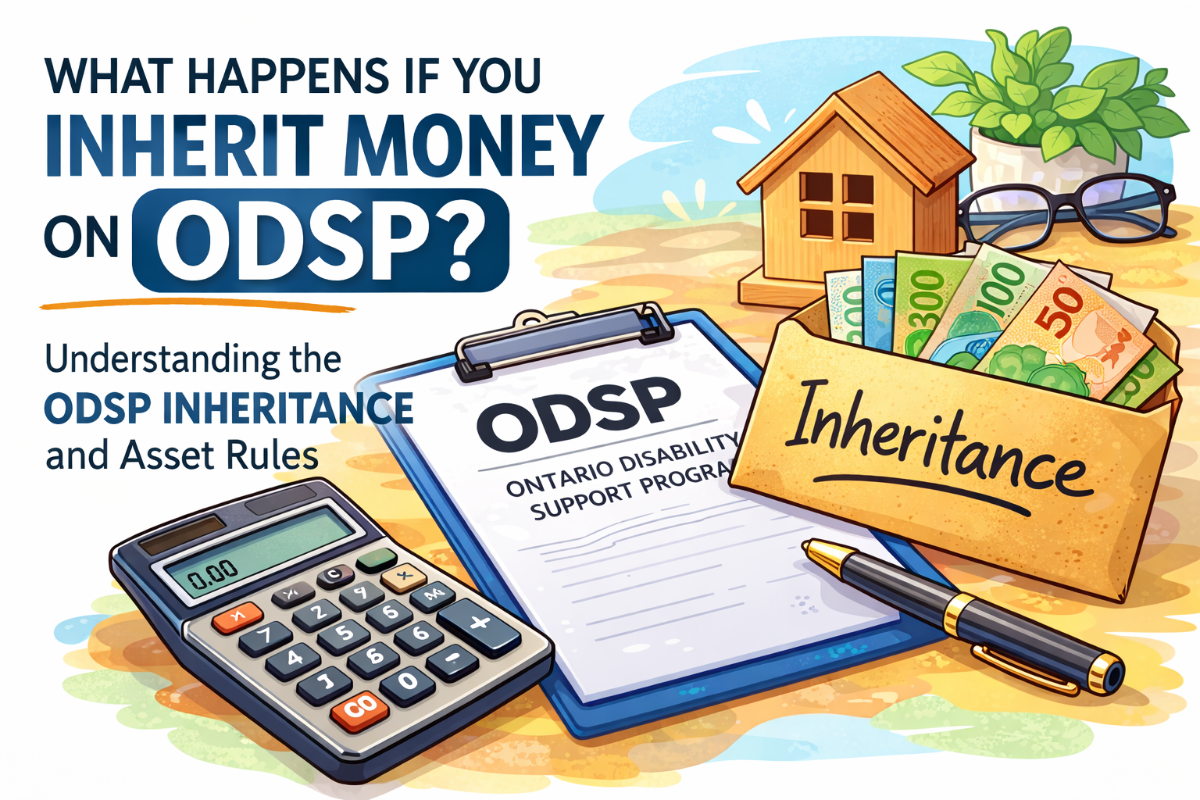
What Happens If You Inherit Money on ODSP?

ODSP Inheritance Limit Explained

It sounds like good news: a cheque arrives, a relative leaves you something in a will, or an estate finally settles.

But if you receive Ontario Disability Support Program (ODSP) benefits, an inheritance can raise a lot of questions very quickly.

Will ODSP stop your payments?
Do you have to report it?
Is there an ODSP inheritance limit?

The short answer: it depends on how the money is received and how much it is.

The longer answer is worth understanding before you cash that cheque.

The First Rule: Always Report an Inheritance

If you inherit money while receiving ODSP, you must report it to your caseworker.

Even if the inheritance is small.

ODSP considers inherited money to be a change in assets, and the program has strict rules about how much a person can have while remaining eligible.

Trying to hide it usually creates bigger problems later, including overpayments or benefit suspension.

Understanding the ODSP Inheritance Limit

The key issue is the ODSP asset limit, not the inheritance itself.

As of now, the standard ODSP asset limits are:

  • $40,000 for a single person


  • $50,000 for a couple


  • Additional amounts for dependents


If your total assets — including the inheritance — stay below the ODSP asset limit, your benefits usually continue normally.

If the inheritance pushes you over the limit, ODSP may temporarily suspend your benefits until your assets fall back below the threshold.

This is why many people receiving ODSP seek advice before accepting an inheritance if possible.

When an Inheritance Doesn’t Count the Same Way

Not every inheritance affects ODSP the same way.

Certain types of inheritances can be treated differently under ODSP rules, including:

  • Henson trusts


  • Life insurance proceeds


  • Structured trusts set up through a will


A properly structured Henson trust, for example, can allow someone to receive funds from an inheritance without those funds counting toward the ODSP asset limit.

These arrangements usually need to be set up by the person leaving the inheritance in their will, which is why estate planning is so important for families with a disabled beneficiary.

What Happens If the Inheritance Is Too Large?

If you inherit an amount that pushes you over the ODSP inheritance limit, it doesn’t necessarily mean the money disappears.

Instead, ODSP may pause benefits until your assets fall below the allowed threshold.

Some people choose to spend part of the inheritance on approved assets, such as:

  • A vehicle


  • Home modifications


  • Assistive devices


  • Paying down debt


  • Education or training


These purchases may not count toward the asset limit, depending on the circumstances.

The key is to understand the rules before spending the money.

A Common Mistake: Cashing the Cheque Without a Plan

One of the most stressful situations happens when someone deposits an inheritance without realizing how it affects their ODSP eligibility.

A sudden bank balance change can trigger a review.

That’s why many ODSP recipients pause before accepting funds and look at the full picture first.

Even a relatively modest inheritance can affect benefits if it pushes someone over the allowable asset limit.

A Simple Way to See How It Might Affect Your Benefits

ODSP rules can feel confusing because they combine income rules, asset limits, and exemptions.

One helpful way to understand your situation is to estimate the numbers.

The ODSP calculators on this site were created to help people quickly see how different financial situations might affect their benefits. They allow you to experiment with scenarios — including changes in assets or income — so you can get a clearer picture before making decisions.

Many people use the calculators simply to reduce stress and get a rough sense of where they stand.

The Bottom Line

Receiving an inheritance while on ODSP doesn’t automatically mean losing your benefits.

But the details matter.

Understanding the ODSP inheritance limit, reporting the inheritance properly, and planning how the funds are handled can make a big difference in protecting your eligibility.

A little planning can turn a confusing situation into a manageable one.

ODSP Payment Dates 2026: Monthly Schedule & Planning Tips

ODSP 2026: What Day Does It Come?

(Because there’s nothing worse than not planning ahead.)

Let’s be honest.

There are few feelings worse than checking your bank account and realizing you thought ODSP was coming tomorrow… but it’s actually next week.

When you’re living on a fixed income, timing matters. Rent matters. Groceries matter. That automatic bill you forgot about? It matters too.

So here’s what you came for (the full list of ODSP payment dates for 2026) followed by a few practical, and slightly light-hearted, ways to make those dates work for you instead of against you.

ODSP Payment Dates 2026

ODSP payments are typically issued on the last business day of each month.

Here are the expected 2026 payment dates:

  • January 30, 2026

  • February 27, 2026

  • March 31, 2026

  • April 30, 2026

  • May 29, 2026

  • June 30, 2026

  • July 31, 2026

  • August 31, 2026

  • September 30, 2026

  • October 30, 2026

  • November 30, 2026

  • December 31, 2026

If a payment date falls on a weekend or holiday, funds are usually deposited the last business day before it.

(Always double-check with your local office if something seems delayed.)

The “End of the Month” Shuffle

You probably already know the pattern.

End of the month hits.
Rent is due.
Fridge is suspiciously empty.
Everyone else on ODSP is also grocery shopping.

And suddenly the world feels louder.

Planning even a few days ahead can soften that chaos.

Which brings us to…

Why These Dates Matter More Than You Think

When income is predictable but limited, small timing decisions make a big difference:

  • Booking appointments

  • Paying utilities

  • Scheduling automatic withdrawals

  • Deciding when to grocery shop

  • Planning transportation costs

If you know exactly when your ODSP payment lands, you can reverse-engineer your month instead of reacting to it. It’s actually kind of fun, too.

And if you’re trying to figure out how earnings, deductions, or benefits might affect your monthly income, you can use Brandon’s simple ODSP calculators to see how different scenarios could impact your cheque.

(That one step alone can reduce a lot of “wait… how much will I actually get?” stress.)

Nothing Worse Than Guessing

Guessing leads to anxiety.

Anxiety leads to overthinking.

Overthinking leads to checking your bank account 17 times in one day.

There’s no award for financial suspense.

Put the dates in your phone. Circle them on a calendar. Tape them to your fridge. Do whatever it takes to make them visible.

Predictability is underrated.

Planning Ahead (Without Becoming a Spreadsheet Person)

You don’t need a color-coded budgeting system.

You just need three small habits:

1. Know Your Fixed Costs

Rent. Phone. Internet. Utilities. Anything automatic.

2. Know Your “Floating” Costs

Groceries. Transportation. Small extras. Be real about your vices.

3. Know Your Timing

When bills leave vs. when ODSP arrives.

That’s it.

Even writing those three things on a piece of paper once a month can prevent that sinking “oh no” feeling.

What If Your Payment Seems Off?

If your amount changes unexpectedly, there are usually a few common reasons:

  • Earnings reporting adjustments

  • Benefit changes

  • Overpayment deductions

  • Special diet or additional supports added/removed

If something doesn’t look right, don’t panic first — verify first. Call your worker, check your MyBenefits account, and review any recent letters.

Clarity beats stress.

A Gentle Reminder

ODSP isn’t just a payment date.

It’s connected to benefits, supports, rules, reporting requirements, and sometimes confusing calculations.

The more you understand how the system works, the less it feels like it’s working against you.

And if you’re ever unsure how work income or other changes could affect your cheque, use the calculators and run the numbers before you make decisions.

Planning ahead isn’t about perfection.

It’s about breathing easier at the end of the month.